

Towards solid-state quantum emitters
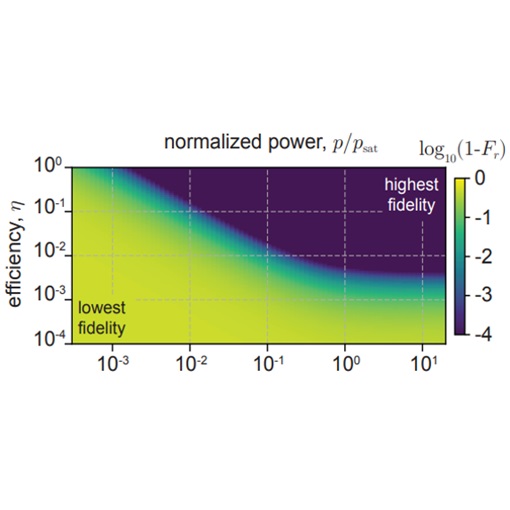
The tin-vacancy (SnV-) center in diamond offers a robust platform for quantum information processing, combining long spin coherence times with high-fidelity optical and microwave control at cryogenic temperatures. A team led by Prof. Jelena Vuckovic (Stanford University, USA) demonstrates single-shot readout of an SnV- electronic spin with a fidelity of 87.4%, which can be enhanced to 98.5% through conditional measurement protocols. The system supports rapid microwave spin manipulation (π-pulse times as short as 80 ns) and enables weak quantum measurement techniques to characterize measurement-induced dephasing and overall readout efficiency. These capabilities establish the SnV- center as a viable candidate for scalable quantum network nodes and precision quantum metrology.
This measurement was realized with the attoCFM I rotation.
Further reading:
E. Rosenthal et al., Phys. Rev. X 14, 041008 (2024)
Microwave Spin Control of a Tin-Vacancy Qubit
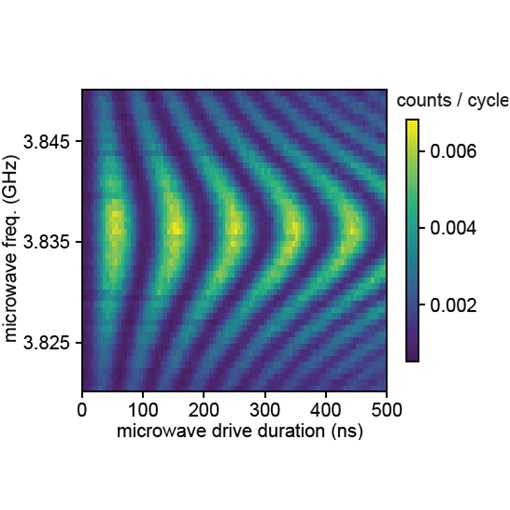
The tin-vacancy (SnV-) center in diamond has emerged as a promising solid-state qubit for scalable quantum networking due to its favorable optical and spin properties. A team led by Prof. Jelena Vuckovic (Stanford University, USA) has demonstrated high-fidelity microwave spin control of SnV- centers for quantum information processing at cryogenic temperatures (~1.7 K). Utilizing naturally strained SnV- centers, the system achieves π-pulse fidelities up to 99.51% and coherence times exceeding 650 µs with XY16 dynamical decoupling sequences. The architecture supports robust spin initialization, readout, and manipulation via microwave pulses, while maintaining narrow optical linewidths (~60 MHz), ensuring compatibility with photonic interfaces. These capabilities position SnV- centers as a scalable platform for implementing quantum network nodes and spin-based quantum memory.
This measurement was realized with the attoCFM I rotation.
Further reading:
E. Rosenthal et al., Phys. Rev. X 13, 031022 (2023)